Japanese Knotweed Contaminated Soil Disposal in BC — What the Rules Actually Require
Why Knotweed Soil Stops Projects in Their Tracks
If your excavation project in British Columbia has turned up Japanese knotweed, you've just inherited a regulated material problem that most disposal sites in BC are not equipped to handle.
You can't haul it to a standard landfill. You can't stockpile it offsite without a plan. And if your project is in one of BC's CFIA Japanese beetle regulated areas, Vancouver, Burnaby, Coquitlam, Port Coquitlam, or Kamloops, moving plants with soil attached requires a CFIA movement certificate before the first load leaves your site.
The contractors and project managers who know this going in — before excavation begins — keep their projects on schedule. The ones who find out mid-project face delays, rescheduled hauls, and disposal costs that weren't in the budget.
This post explains exactly what BC regulations require, and how Cache Creek #1 Logistics handles knotweed-contaminated soil disposal for projects across the Lower Mainland, Fraser Valley, and Kamloops regions.
What Makes Knotweed Soil Regulated in BC
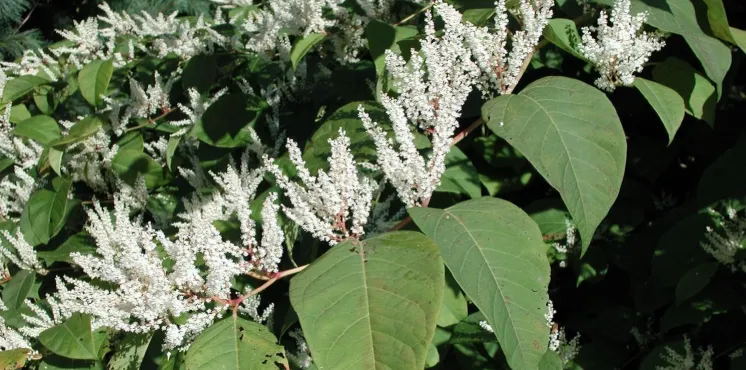
Japanese knotweed (Reynoutria japonica) spreads through stem and root fragments both above and below ground. New colonies are established from small pieces of rhizome. Once established, it grows through concrete, asphalt, and building foundations and spreads rapidly through riparian areas, which is why BC treats infested soil as a regulated material requiring controlled disposal.
Two frameworks govern knotweed soil disposal in BC:
BC Ministry of Forests / Ministry of Transportation and Infrastructure. The provincial government published the Guidelines for the Excavation, Transport & Disposal of Invasive Knotweeds & Knotweed Infested Soil (November 2024), jointly issued by the BC Ministry of Forests and BC Ministry of Transportation and Infrastructure. These guidelines set out the requirements for identification, handling, transport, and disposal of knotweed-infested material on construction, infrastructure, and remediation projects across BC. Source: BC Government — Invasive Species Publications
Canadian Food Inspection Agency (CFIA) — Japanese Beetle Regulated Areas The CFIA has established Japanese beetle regulated areas in parts of Vancouver, Burnaby, Coquitlam, Port Coquitlam, and, as of June 2025, Kamloops. Within these regulated areas, the movement of plants with soil, soil-related matter, or growing media attached out of the regulated area requires a CFIA-issued movement certificate year-round. Note: as of May 2023, bare soil alone and above-ground plant parts are no longer regulated articles under the CFIA Japanese beetle rules. However, BC provincial knotweed guidelines still apply separately to knotweed-infested soil regardless of CFIA status. Source: CFIA — Regulated Areas for Japanese Beetle in BC
Projects in CFIA-regulated areas involving plants with attached soil face both frameworks simultaneously.
The 15-Metre Rule: More Soil Is Affected Than You Think
One detail that catches many project teams off guard is the buffer zone requirement in the BC provincial guidelines.
According to the BC Ministry of Forests guidelines, soil within 15 metres of any knotweed occurrence is considered infested with viable knotweed propagules to a depth of at least 2 metres. All of that material must be handled and disposed of as knotweed-infested soil — not as clean fill.
The practical impact: a knotweed patch that looks small on the surface can mean a very large volume of regulated soil once the 15-metre buffer and 2-metre depth are applied. This directly affects excavation quantities, disposal volumes, and project budgets.
The guidelines also note that soil distributed from areas adjacent to knotweed infestations as "clean fill" may carry liability if knotweed is later found to be present. In those cases, the recommended buffer increases to 20 metres.
Identifying knotweed before excavation begins, not after, is the single most effective way to keep disposal costs and project timelines under control.
What BC Regulations Require When Moving Knotweed Soil
The BC provincial guidelines set out specific requirements for any project involving knotweed-infested material:
A Knotweed Management Plan is required. Where knotweed presence is confirmed, a Knotweed Management Plan prepared by a Qualified Environmental Professional (QEP) must be developed as part of the project's Environmental Management Plan before any ground disturbance begins.
All loads must be covered during transport. The guidelines specifically require that excavated knotweed material be covered prior to and during transport, lining the truck box and covering with poly tarps. All vehicles, equipment, and tools must be cleaned before leaving the excavation area or disposal site.
CFIA movement certificate required in regulated areas. If your project is within a CFIA Japanese beetle regulated area and you are moving plants with soil or soil-related matter attached out of that area, a CFIA movement certificate is required before transport begins. Contact CFIA before excavation starts at 604-292-5742 or [email protected]. Current regulated areas include parts of Vancouver, Burnaby, Coquitlam, Port Coquitlam, and Kamloops. Source: CFIA — Regulated Areas for Japanese Beetle in BC
Disposal location must be confirmed before excavation starts. The BC guidelines are explicit: suitable disposal locations must be confirmed in advance of excavating and transporting knotweed-infested material. Disposal sites must meet specific setback requirements from waterways, water wells, and critical infrastructure.
Documentation must be maintained throughout. An InvasivesBC Mechanical Treatment Record must be completed, noting the disposal location. Load records, movement certificates where applicable, and disposal receipts should all be maintained as part of the project file.
Why Finding a Permitted Disposal Facility Is Harder Than It Sounds
The BC guidelines acknowledge directly that licensed industrial disposal facilities for knotweed-infested soil are rare in BC, and that policies at standard regional landfills vary, with most not accepting knotweed material at all.
The reason is straightforward: a facility that accepts knotweed-infested soil takes on long-term containment and monitoring obligations. The provincial standard for monitoring treated knotweed is 20 years after the first year of no detectable surface growth before an occurrence can be considered eradicated. That is a significant ongoing commitment that most facilities are not equipped or permitted to take on.
This is why many project teams across the Lower Mainland and Fraser Valley contact Cache Creek #1 Logistics.
How Cache Creek #1 Logistics Handles Knotweed Disposal
Cache Creek #1 Logistics operates a CFIA-certified environmental processing facility at 1101 East Campbell Hill Drive, Cache Creek, BC, licensed to accept and process knotweed-contaminated soil, Japanese beetle-infested soil, invasive species, and other regulated materials under both CFIA and BC provincial requirements.
Two ways to use the service:
Direct Drop-Off at Cache Creek: Bring your regulated material directly to the Cache Creek facility. This option is available to projects anywhere in BC that are organizing their own transport. The facility is situated at the junction of Highway 1 and Highway 97 — accessible from Metro Vancouver (approximately 3.5 hours), Kamloops (approximately 1 hour), and the Fraser Valley.
Pickup Service Cache Creek #1 Logistics operates a pickup fleet that collects regulated waste directly from your project site. Pickup service is available in Vancouver, Burnaby, the Fraser Valley, the Lower Mainland, and Kamloops, scheduled or on demand.
What's included:
CFIA movement certificate support and documentation assistance
Specialized processing for Japanese beetle-infested materials
Full compliance documentation at every step
Weekend service available by advance arrangement
Transparent per-tonne pricing with a 30-tonne minimum
Getting a quote is straightforward. Contact the team directly:
Phone: 604-833-6332
Email: [email protected]
Facility: 1101 East Campbell Hill Drive, Cache Creek BC V0K 1H0
Practical Steps Before Excavation Begins
If your project in BC involves knotweed-contaminated soil, here is the sequence that keeps projects on schedule:
Identify knotweed presence during planning — have a QEP assess the site and reference the InvasivesBC provincial database for occurrences within 100 metres of the project footprint before any ground disturbance.
Map the 15-metre buffer zones — add these to all project drawings and factor the regulated soil volume into your disposal budget before excavation begins.
Check whether your site is in a CFIA Japanese beetle regulated area — current regulated areas include parts of Vancouver, Burnaby, Coquitlam, Port Coquitlam, and Kamloops. If yes, and you are moving plants with soil attached, contact CFIA at 604-292-5742 before breaking ground.
Confirm your disposal pathway in writing — contact Cache Creek #1 Logistics in advance to confirm acceptance, intake requirements, and logistics. The BC guidelines require disposal locations to be confirmed prior to excavation.
Align your documentation — Knotweed Management Plan, CFIA movement certificates where applicable, load records, InvasivesBC treatment records, and disposal receipts should all be prepared as part of your project workflow from the start.
Frequently Asked Questions
Can knotweed-infested soil go to a regular landfill in BC? Generally no. The BC provincial guidelines state that landfill policies vary throughout BC and that permitted disposal facilities for knotweed are rare. Most standard regional landfills do not accept it. You need a facility specifically licensed to receive and process it.
Does the CFIA movement certificate apply to all soil in regulated areas? No — this is an important distinction. As of May 2023, bare soil alone is no longer a regulated article under CFIA Japanese beetle rules. The movement certificate applies to plants with soil, soil-related matter, or growing media attached leaving a regulated area. BC provincial knotweed guidelines apply separately and independently to knotweed-infested soil. Source: CFIA — Regulated Areas for Japanese Beetle in BC
Which municipalities are currently in a CFIA Japanese beetle regulated area? As of June 2025: parts of Vancouver, Burnaby, Coquitlam, Port Coquitlam, and Kamloops. Boundaries within each municipality vary. Check the CFIA regulated areas map or contact CFIA directly to confirm whether a specific address falls within a regulated area.
How much soil around a knotweed patch is considered infested? Per the BC Ministry of Forests guidelines, soil within 15 metres of any knotweed occurrence is considered infested to a depth of at least 2 metres. All of that material must be handled as knotweed-infested soil.
Does Cache Creek #1 Logistics provide documentation support? Yes. The service includes CFIA movement certificate support, specialized processing documentation, and full compliance paperwork at every step.
What is the minimum volume for disposal at Cache Creek #1 Logistics? The minimum is 30 tonnes. Call 604-833-6332, email [email protected], or visit cachecreeksolutions.com/contact-us to confirm fit for your project volume and timeline.
Does Cache Creek #1 Logistics offer pickup from project sites? Yes — pickup service is available in Vancouver, Burnaby, the Fraser Valley, the Lower Mainland, and Kamloops. Projects outside these areas can use the direct drop-off option at the Cache Creek facility.
Ready to Confirm Your Disposal Pathway?
If your project involves knotweed-contaminated soil — whether you are in the planning stage, active excavation, or approaching close-out — confirming your disposal pathway now is the most practical step you can take.
Cache Creek #1 Logistics is one of the few CFIA-certified facilities in BC licensed to accept and process knotweed-infested soil, with pickup service across the Lower Mainland and Fraser Valley and direct drop-off available at Cache Creek.
Get a quote at cachecreeksolutions.com/contact-us
Cache Creek #1 Logistics is a CFIA-certified environmental processing facility licensed for regulated material disposal in BC. Acceptance of material is subject to confirmation of material details and applicable requirements. This article references the BC Ministry of Forests Guidelines for the Excavation, Transport & Disposal of Invasive Knotweeds & Knotweed Infested Soil (November 2024) and CFIA regulated areas guidance for Japanese beetle in BC (effective June 2025). Regulatory requirements may change — always verify current requirements with the relevant provincial and federal authorities.

