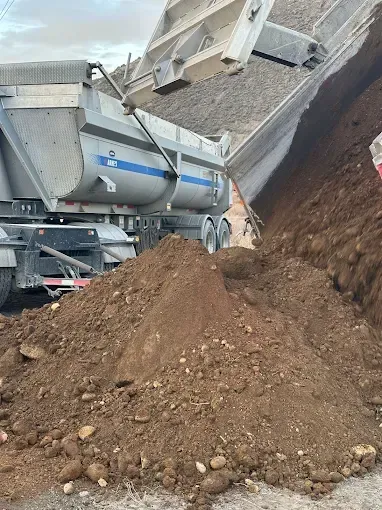
Managing Unexpected Regulated Materials During Excavation: Operational Considerations for BC Projects
Executive Summary
Even with careful planning, excavation projects in British Columbia sometimes encounter regulated or suspect materials that were not anticipated during early stages. When this occurs, project teams must respond quickly to manage handling, logistics, and documentation without disrupting overall progress.
This article outlines common operational considerations when unexpected regulated materials are encountered during excavation. It reflects patterns observed across construction, excavation, landscaping, and municipal projects in British Columbia and is intended as an execution-stage reference rather than a regulatory guide.
Why unexpected material conditions occur
Subsurface conditions are not always fully predictable. Variations in historical land use, undocumented fill, or localized impacts can result in material that differs from initial assumptions.
When unexpected regulated material is encountered, teams often need to pause certain activities while next steps are clarified. How those pauses are managed can influence both schedule and cost.
Immediate considerations once unexpected material is encountered
Pause and isolate material as needed
Projects often focus first on preventing cross-contamination by isolating suspect material from clean material. Clear separation helps preserve disposal options while next steps are reviewed.
Confirm handling and routing assumptions
Once material conditions are identified, teams typically review whether existing disposal pathways remain appropriate or if adjustments are required.
Clarify internal escalation and decision points
Unexpected conditions often trigger questions about who has authority to approve routing changes or documentation adjustments. Clear escalation paths help avoid unnecessary delays.
How logistics and disposal coordination fits into the response
Unexpected regulated materials introduce coordination challenges beyond excavation itself.
Projects often need to align:
Handling practices in the field
Transportation availability
Receiving facility intake requirements
Documentation readiness
When these elements are addressed together, material movement tends to resume more smoothly.
Why advance response planning helps
Some projects prepare for uncertainty by discussing response scenarios during early planning, even if regulated materials are not expected.
This may include:
Defining how unexpected materials are isolated
Identifying who reviews disposal options
Establishing points of contact for logistics and documentation questions
Having these frameworks in place can reduce pressure when conditions change unexpectedly.
Common pitfalls when unexpected materials are encountered
Continuing excavation without clear separation
This can complicate handling and reduce disposal options later.
Treating unexpected material as a purely technical issue
Logistics and documentation often become the limiting factors, not excavation itself.
Delaying coordination until hauling is scheduled
This can compress timelines and increase disruption once trucks are involved.
When Cache Creek #1 Logistics is often involved
Projects in British Columbia commonly engage Cache Creek #1 Logistics when unexpected regulated or suspect materials are encountered during excavation and disposal pathways need to be confirmed quickly.
This may include:
Reviewing handling and routing options
Coordinating disposal logistics
Supporting documentation readiness
Aligning material movement with active site operations
Cache Creek #1 Logistics operates as a licensed processing and regulated material logistics partner, supporting disposal, transportation, and documentation workflows for materials we are certified to handle. Acceptance of material is subject to confirmation of material details and applicable requirements.
Frequently Asked Questions
Is encountering unexpected regulated material common?
It occurs periodically, particularly on sites with complex histories or undocumented fill.
Should excavation stop entirely when unexpected material is found?
Not always. Many projects isolate affected areas while reviewing next steps.
Does unexpected material always cause delays?
Delays are not inevitable, but coordination is often required to resume work smoothly.
Can Cache Creek #1 Logistics assist during active excavation?
Yes. Cache Creek #1 Logistics supports regulated material logistics and disposal coordination during active excavation when materials we are certified to handle are encountered.
Next-Step Considerations
If your project in British Columbia may encounter unexpected regulated or suspect materials during excavation, having response and coordination considerations in place can help reduce disruption.
Cache Creek #1 Logistics can support discussions around handling, logistics, and documentation so disposal decisions are coordinated efficiently when conditions change.
